Q1 2026
Author
BW Creative
Photography
Ryan Unwin
Sydney property in the first three months of the year (Q126) has been a patchwork of conditions, with activity levels shifting frequently and conditions varying across price points and property types. The forces shaping decision-making for buyers and sellers are inherently complex and expected to remain that way for some time.
The question it poses is clear. What does this mean for Sydney: one of the world’s most desirable places to call home? The view across BresicWhitney postcodes – those in proximity to the CBD and harbour – is that while sentiment has softened and surface demand has wavered, the depth of it hasn’t.
The Quarterly dives into the here and now of Sydney property. The when and how of buying and selling, behind the headlines. With trends that offer more to explore, and a curated update from our data partner Cotality, thanks for reading this edition.
Reading the play (small sub-heading in text or could be built out as its own section)
Economic headwinds, speculation around capital gains tax changes, higher interest rates (4.1%), more property on the market – increasing choice - and a volatile global backdrop. Each of these are complex. Together, they create a highly nuanced framework, shaping the decisions of how, and when, Sydney moves.
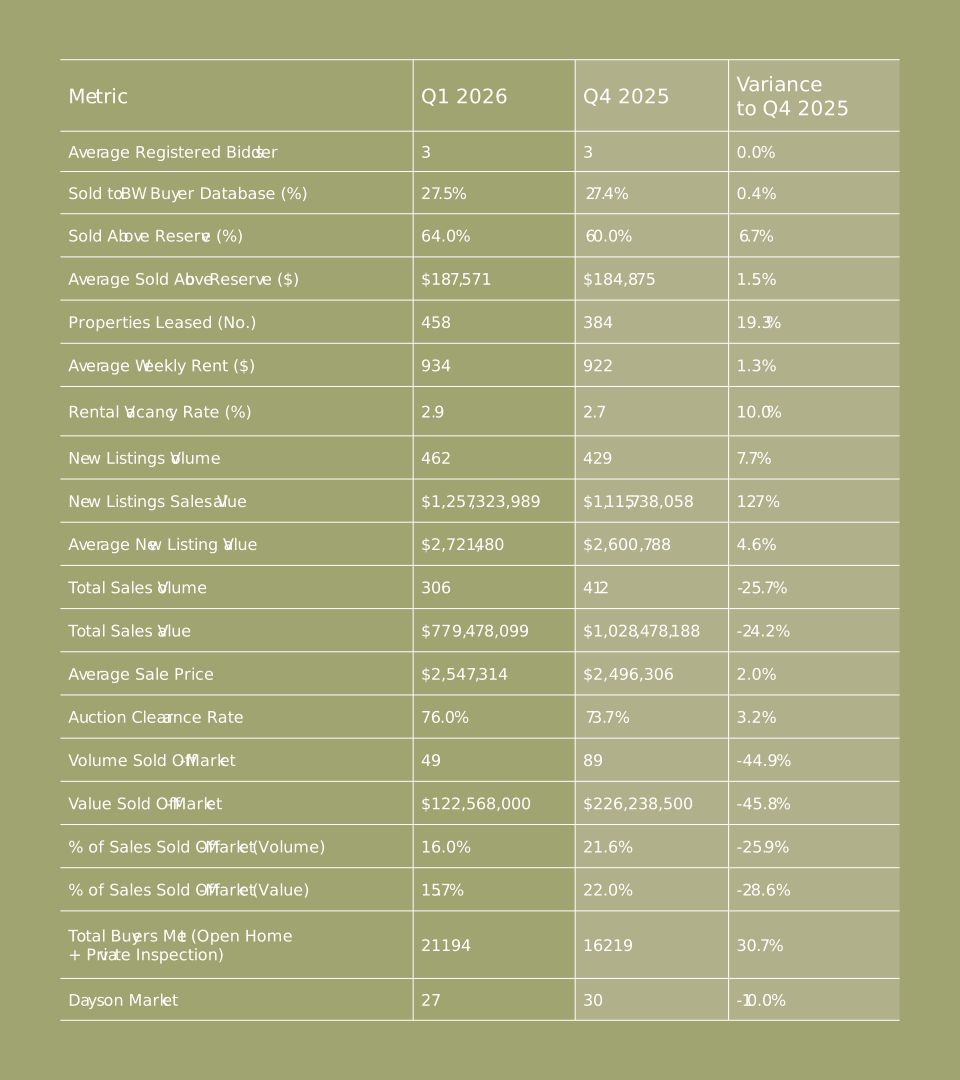
Industry data is beginning to capture the shift at play. As of early April, auction clearance rates are sitting at approximately 55% across wider Sydney, down from 65% year-on-year. Nearly three in four BresicWhitney properties sold prior to auction across Q1. A growing proportion of sales transacted ‘off-market’, or ‘off-portal’, without wider public advertising.
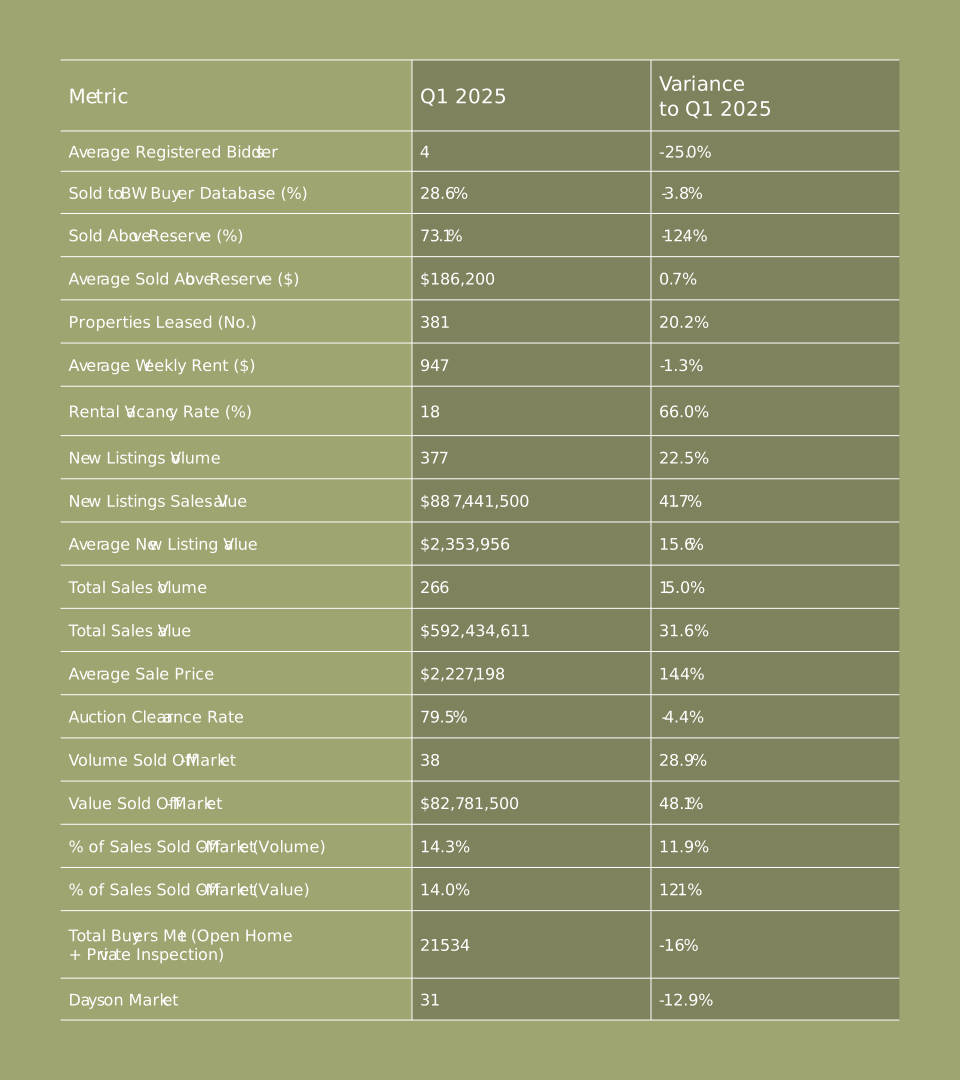
Supply has also increased, providing less urgency and more choice for active buyers. New listings across BresicWhitney increased 22.5% year-on-year. For sellers wishing to transact swiftly, it’s imbued a willingness to meet the market, and effectively engage with genuine buyer interest when it presents itself.
Housing affordability in Sydney, or the lack thereof, is not simply a result of conditions interacting. It’s a structural issue, driven by a long-term undersupply of quality housing. Demand has outpaced availability for not only buyers, but tenants. Supply constraints show no sign of easing in the Sydney rental market. State Government initiatives aimed at addressing the imbalance, including more housing and the easement of planning pathways, are welcomed but yet to yield meaningful change.
It’s estimated that approximately 62% of income is now required to service an entry-level Sydney home – just one reflection of the broader economic and cost-of-living pressures for Sydneysiders.
"Sydney property in 2026 is asking more of everyone in it. More patience, more preparation, more clarity on what's driving conditions.” - Will Gosse, BresicWhitney CEO
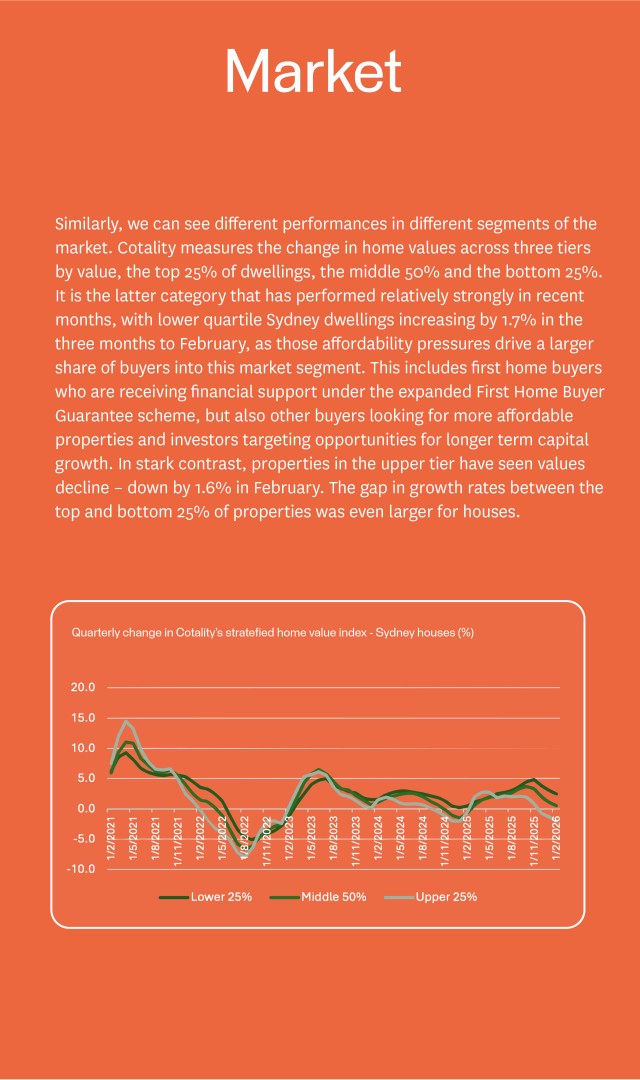
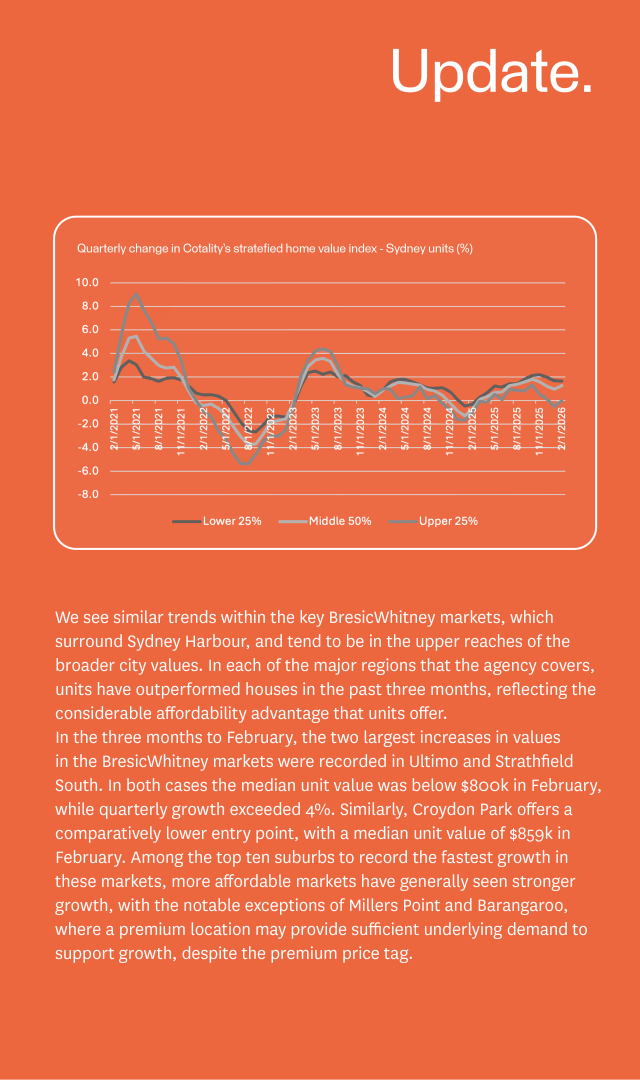
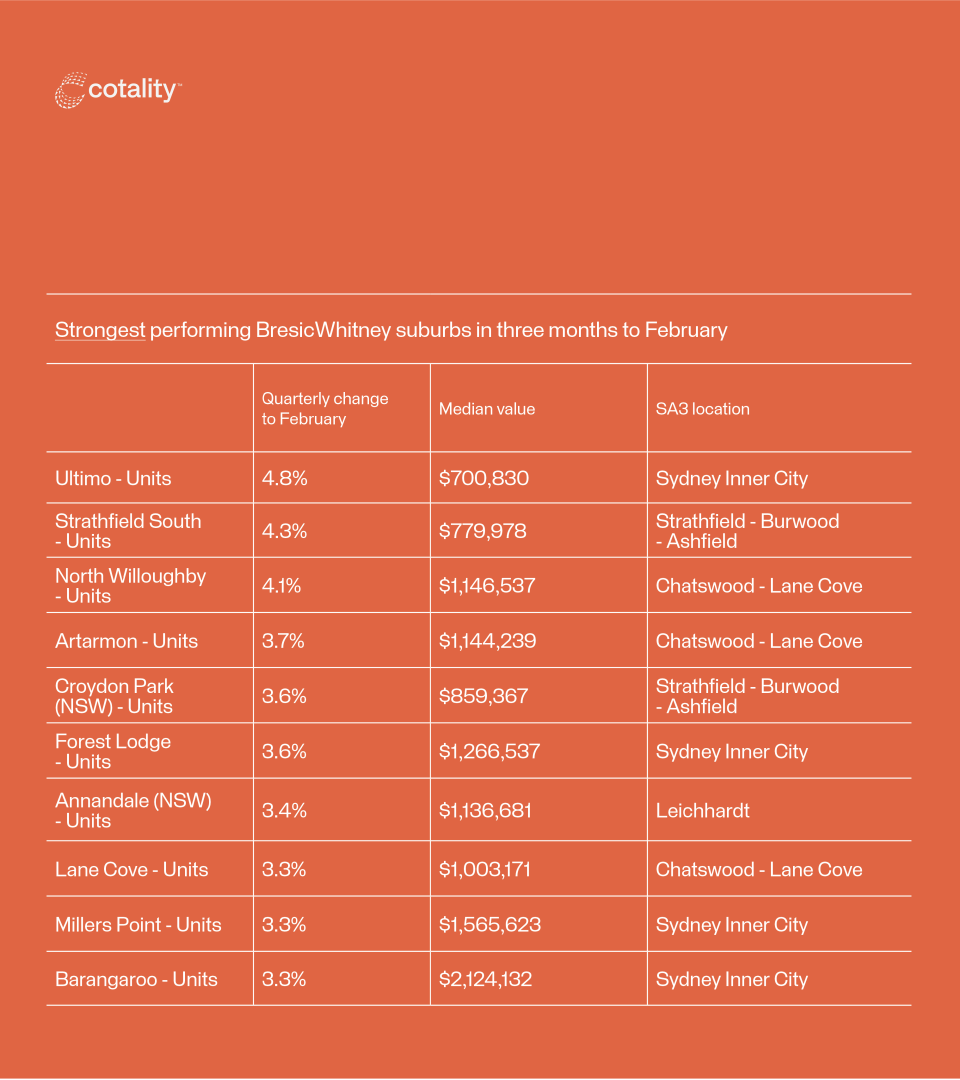
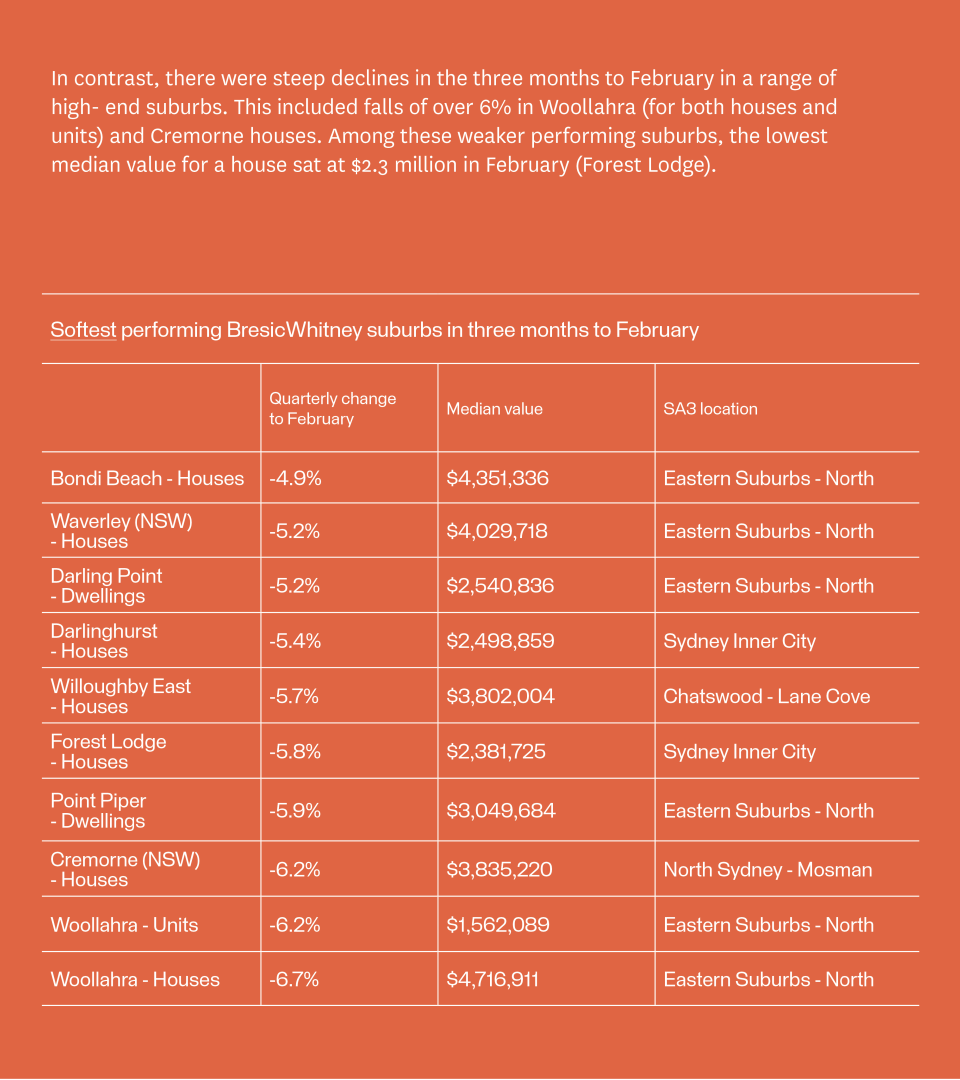
Capital Gains Tax (CGT) uncertainty is influencing seller decision-making. It's true that owners sitting on significant gains are pausing, weighing up the cost of selling now versus holding. Yet the data tells a more nuanced story. Total listings across Sydney sat around 7.0% above the five-year average in late March, having tracked below average in the latter months of 2025 and into early 2026. The amount of stock placed onto the market over Q1 has remained substantial - sellers who moved early were motivated by the momentum across 2025, and a desire to optimise sale prices while rates held. Supply is rising in Sydney, and more homes on market contributes to the softened auction clearance rate.
It's tempting to classify this as a supply story: one in which the Sydney market is simply adapting to. However, it’s deeper than that. BresicWhitney believes it reflects a more sophisticated shift in buyer behaviour that will remain for some time. For sellers, it’s brought the timeframes in which properties sell into sharp focus – and the strategies needed to realise this.
It's a reality that became increasingly evident as Q1 progressed. Negotiations were requiring closer handling to bring buyers and sellers together. The most efficient sales results (by time on market) resulted when there was equal appetite and contextual understanding between both parties. It was homes $2,000,000+ where misalignment turned into the cost of time. Healthy competition remained in properties up to and between $1,500,000 to $2,000,000.
It's not only higher auction clearance rates that indicate where competition sits, but the percentage properties sell above reserve. The percentage of homes sold above reserve declined by approximately 10% over the three months to March, according to BresicWhitney data.
The number of buyers participating in the market also softened, resulting in a 10% compression year-on-year. BresicWhitney data revealed an average of 1,200 buyers were met per week across Q126, from 1,350 in Q125.
It's clear that campaign strategies matter now more than ever. Off-market exposure and pre-market buyer introductions continue to regularly deliver win-win outcomes for buyers and sellers. The ability for both sides of the ledger to harness an agents’ network is also critical: 28% of properties listed by BresicWhitney sold to existing buyers within its network across Q1. Despite a slight reduction annually (<5%), it highlights the role of long-term, agent-customer connections and the market’s appetite to stay close to opportunities amidst broader change.
The opportunity window
It's not often that interest rates and opportunity appear in the same sentence, but Sydney property has a habit of rewriting the rules. First, the context: the two increases in the cash rate have taken it to 4.1%. Inflation is not expected to return to the middle of the target band until 2028.
For some, this is accelerating decision-making, instilling confidence to act when others are hesitating. It’s likely a factor contributing to the number of new listings continuing to be placed on the market in 2026. Easter through late Autumn remains a telling window of market momentum. How activity unfurls across April and May will underpin the results seen across Winter.
“The market hasn't fundamentally changed – what has is the weight of the decision to sell, buy or hold. Rationality is at the fore. But thinking more deeply and waiting indefinitely aren't the same thing. If you’re looking to participate in the market now and can feasibly do so, you can take confidence in the longer-term fundamentals. The current complexity is expected to remain in the months ahead.” Will Gosse, BresicWhitney CEO
The efficacy of off-market sales is nothing new - but what is new is how well understood and accepted off-market, or off-portal, sales have become.
Historically used to surface buyer interest before an on-market campaign, it’s now accepted as an end-to-end solution offering discretion, choice, and early access to opportunities. Cost-savings is also a factor, with off-market properties commonly offered by agencies as complimentary for sellers – a stark comparison to the robust investment required for an on-market campaign.
It's a method that continues to be sought by customers in varying market cycles, according to BresicWhitney data. Approximately 20% of BresicWhitney sales transact off-market, with the group a long-term advocate of the model. January’s 13% rose to 18% in February, before dipping to 16% in March, in line with the broader market softening.
Off-market sales are expected to continue growing in prevalence. While typical on-market campaigns and auctions play a crucial role in a healthy, accessible market, an off-market approach meets customer appetite for choice and diversification in a homogenised landscape.
Adding to the narrative is a report from Cotality, that highlights data ownership as a key priority among real estate businesses. 77% of respondents of the Decoding 2026 Report rated greater control of customer data as highly important. Just 28% of agencies reported listing properties on their own website before publishing on portals, indicating a continued prioritisation of portal-first distribution.
Survey responses indicated a growing awareness of changes in how customers discover property, engage with agencies, and move through digital channels. This suggests a continued focus on digital capability and customer communication in 2026, with agencies at different stages of aligning intent with operational practice.
“Off-market isn't a workaround to a traditional campaign. The work still needs to be done and the strategy still clear. It is however capable of producing faster, more efficient results for sellers and buyers when circumstances are right. Execution matters enormously in the current market, meaning the value in it as a method of sale is becoming more recognised.”
Sydney property has delivered sustained value over the long term, not because buyers and sellers acted at precisely the right moment, but because they participated.
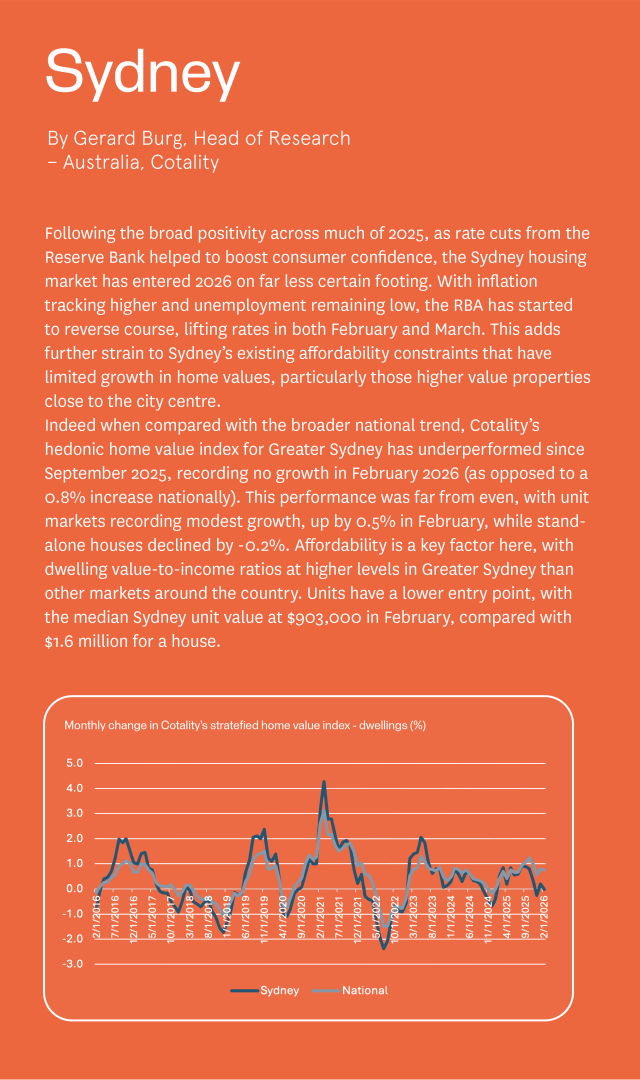
While Sydney house price reduced by -0.2% in the March quarter, and -0.1% month-on-month, year-on-year growth remained robust at +4.8%. That’s according to Cotality’s Monthly Home Value Index, which highlighted a wider national divergence. Sydney and Melbourne (0.6%) recorded declines, while Perth (7.3%), Brisbane (5.1%), Adelaide (3.6%) and Darwin (3.4%) recorded gains. The increases were largely attributed to undersupply across the smaller capital cities.
BresicWhitney's average sale price across Q1 2026 also increased by 14.4% on the same period last year. While it’s not an all-encompassing indicator of broad value increases, it speaks to the inherent value proposition, and enduring buyer competition, for well-located Sydney property.
Bolstering the reasons to participate when the time is right individually, not calendar wise, is the ongoing subversion of activity within peak seasons. For sellers, the traditional ethos of listing your home in spring remains challenged by omni-present activity. Sydney no longer waits for the calendar, and an analysis of the days in which most property sold by volume across BresicWhitney highlights the ongoing spread of activity.
When neighbours become buyers.
Right place, right time in Redfern.
The buyers lived on the same street, five doors down. When neighbours were called before the listing went live, they came to the photo shoot out of curiosity - not necessity. They sold their own home to buy it. Exchanged within 34 days, before auction.
When neighbours become buyers.
The buyer had been watching this Hunters Hill street for years - and happened to live on it. Found the listing online, and an offer the week prior evolved into an auction result above guide.
“The seasonal premium is less reliable than it's ever been. A well-prepared property with the right people and strategy to deliver it can transact in any month. That's not a prediction, but what the data continues to show us.” - Will Gosse.
The big picture
The Sydney rental market is also telling a story of seasonal subversion. The late autumn and early winter months are typically when demand slightly cools, offering tenants a reprieve from the summer peak. This may not materialise in 2026. As of January, vacancy across Sydney is back to 1.2%, a figure that reflects the persistent supply-demand imbalance.
The level of new rental properties entering the market are not able to keep pace with occupier demand. Rising interest rates have shifted the calculus for investors considering new acquisitions or expanded portfolios. This further constrains the pipeline of available rental properties.
Housing supply remains a structural long-term constraint, with government efforts to boost supply and ease planning pathways over the last six to twelve months yet to produce any immediate uplift. Widespread affordability pressures compound this. As the cost of living rises and barriers remain for those looking to enter or upsize within Sydney’s housing market, more people are renting for longer periods of time.
Population growth also plays a role. Net overseas migration[1] contributed a net gain of 306,000 people to Australia's population in the year to June 2025. While that figure is moderating from its post-pandemic peak, it remains above pre-pandemic norms and is forecast to remain elevated through 2026.
[1] https://www.abs.gov.au/statistics/people/population/overseas-migration/latest-release
On the ground
Tenants continue to prioritise the key lifestyle suburbs - such as the Eastern Suburbs, Inner City and Inner West - where strong connectivity and amenity is on offer. Continued public investment into hospitality, cultural infrastructure and transport are strengthening the desirability of these hubs. This means demand is unlikely to ease over the short to medium term.
The depth of tenant demand is reflected in the 19% increase in the number of properties leased by BresicWhitney over Q1 (450+), compared to the same period last year. This evidences that homes available for lease have been swiftly met with existing tenant demand.
For owners and investors, sustained demand serves to underpin efficient leasing timeframes and viability of future rental returns. Both important considerations as holding costs increase.
“A well-presented home in a lifestyle suburb close to the city doesn't sit for long right now. We're seeing multiple applicants moving quickly and decisively – tenants know what they want, and when the right property comes up, they don't hesitate. Our team is feeling that demand every day.
“Vacancy is low and the signs that would typically point to a winter reprieve aren't there. Supply remains the critical issue, and until that shifts in a meaningful way, we don't expect conditions to ease.” – Chantelle Collin, BresicWhitney, Head of Property Management
Road Ahead.
Levels of activity across April and May will act as a window into what’s ahead. With a third interest rate rise slated for May, it’s possible that the winter months will offer subdued results.
All facets of the Sydney property market carry complexity at present - mirroring not only the many economic and structural constraints that influence the landscape, but the international and geopolitical shifts at play. Much will remain inconsistent and difficult to predict. What remains consistent is Sydney's long-term track record as one of the world's more resilient housing markets.
"Through complexity often comes opportunity, and we've seen that in previous cycles. Those who stay close to the market are those who navigate these periods with greater clarity and context. The goal isn't, and shouldn't be, absolute certainty. What matters most remains the forces that speak to the heart of where we live, and why: life stage, financial circumstance, lifestyle, and connection." Will Gosse.